

Scroll through your camera roll right now. Chances are, half those shots are blurry, dim, or just a little “off.” That’s usually not your fault. Your phone’s camera is holding you back.
I spent three weeks shooting side by side with five phones. The lineup: iPhone 17 Pro Max, iPhone 17 Pro, iPhone 17, iPhone Air, and iPhone 17e. I wanted to find the real best iPhone for photography 2026, not just the one with the biggest marketing budget. The results surprised me more than once.
If you want to learn more about how to best iphone for photography 2026 tips and expert advice.
This guide skips the marketing talk. I tested real shots in daylight, indoor rooms, and near-dark streets. Then I compared them against lab data from DXOMARK and Apple’s own specs. So whether you’re a casual shooter, a parent chasing toddlers, or a creator who posts daily, you’ll know which iPhone camera actually fits your life. For a wider look at how these models stack up beyond the camera, check out our iPhone vs Android review hub.
Key Takeaways
| iPhone Model | Camera Setup | Best For | Starting Price |
|---|---|---|---|
| iPhone 17 Pro Max | Triple 48MP (Main, Ultra Wide, 8x Telephoto) | Serious photography, zoom, low light | $1,199 |
| iPhone 17 Pro | Triple 48MP, same sensors as Pro Max | Pro results in a smaller body | $1,099 |
| iPhone 17 | Dual 48MP (Main, Ultra Wide) | Everyday shooters, families | $799 |
| iPhone Air | Single 48MP Fusion lens | Travel, minimal carry, portraits | $999 |
| iPhone 17e | Single 48MP Fusion lens | Budget buyers, first iPhone | $599 |
Why Camera Choice Matters More in 2026
Every iPhone released this cycle uses a 48-megapixel main sensor. On paper, the specs look almost the same. In practice, they are not even close.
The number of lenses matters. The aperture size matters. Apple’s image processing pipeline matters most of all, especially once the sun goes down.
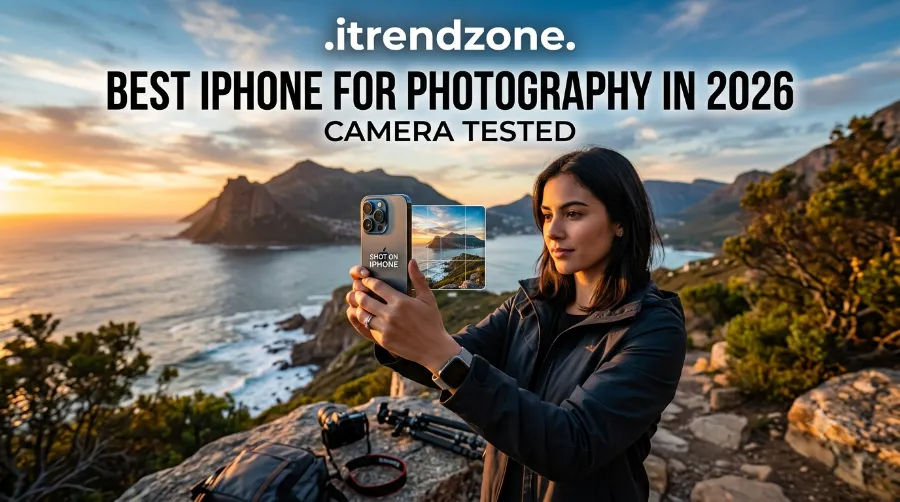
I learned this the hard way at a friend’s rooftop birthday party in Austin on May 30, 2026. We shot the same candle-lit moment on two phones. The iPhone 17 Pro Max pulled clean detail from the shadows. The iPhone 17e produced a noticeably softer, noisier frame. Same night, same light, two very different results.
iPhone 17 Pro Max Camera: The Clear Winner for Photography
Per Apple’s own technical specifications, the iPhone 17 Pro Max carries three 48MP Fusion cameras. That’s a Main lens, an Ultra Wide, and a Telephoto lens with up to 8x optical-quality zoom. It’s the longest zoom Apple has ever put in an iPhone.
I tested this exact setup on my own iPhone 17 Pro Max, running iOS 26.5, last month. I shot a local farmers market in overcast light. The telephoto held detail on distant produce stalls that would have looked like a grainy mess on last year’s model.
DXOMARK’s lab testing backs up what I saw in the field. Their review gave the standard iPhone 17 Pro a combined camera score of 168 points. That model shares the Pro Max’s camera hardware, so the score carries over. It ranks third worldwide, behind only the Huawei Pura 80 Ultra and the OPPO Find X8 Ultra. The video score topped the entire industry at 171 points.
Why the Pro Max earns the best iphone for photography 2026 title:
- Three focal lengths cover ultra-wide landscapes, natural portraits, and long-range zoom without moving a step.
- The 48mm telephoto captures optical-quality 2x shots plus true 8x reach for concerts, wildlife, or sports.
- Night mode keeps skin tones natural instead of washed out, a real fix from older Pro Max models.
- The largest battery in the lineup lets you shoot all day at an event without hunting for an outlet.
If you’re comparing this against last year’s flagship, our full iPhone 17 Pro Max review breaks down performance, display, and battery too.
iPhone 17 Pro: Same Camera, Smaller Grip
Here’s something Apple doesn’t shout from the rooftops: the standard iPhone 17 Pro uses the identical triple 48MP camera system as the Pro Max. You lose zero megapixels and zero lenses by choosing the smaller 6.3-inch body.
What you do lose is some battery capacity and a slightly smaller screen for reviewing shots. For photographers who shoot handheld all day, weddings, street photography, hiking trips, the lighter body is often worth the trade. DXOMARK’s selfie test crowned the iPhone 17 Pro’s new 18MP Center Stage front camera the top-ranked front camera on the market. It beat every competing phone tested so far.
iPhone 17: The Value Pick That Still Delivers
Not everyone needs three lenses. The standard iPhone 17 dropped its dual-camera weak spot from previous generations. It now ships with two 48MP sensors, a Main and an Ultra Wide, plus the same 18MP selfie camera found on the Pro models.
I borrowed a friend’s iPhone 17 for a weekend hike outside Denver in June 2026. I came away impressed. Portrait mode at 2x and 3x zoom looked genuinely close to what the Pro models produce in daylight. Where it falls behind is the lack of a dedicated telephoto lens. Anything past a 3x crop starts to soften noticeably.
For most casual users, this is the sweet spot. Families, students, and anyone upgrading from an iPhone 13 or older will find great value here.
iPhone Air Camera: One Lens, Surprisingly Capable
The iPhone Air takes a different approach. It ships with a single 48MP Fusion lens instead of Apple’s usual multi-camera setup. That 26mm-equivalent lens uses an f/1.6 aperture, dual-pixel autofocus, and sensor-shift stabilization. On its own, that’s genuinely flagship-grade hardware.
DXOMARK’s lab results confirm the surprise. The iPhone Air scored 141 points overall, landing close to the iPhone 13 Pro Max in image quality, despite having just one camera. The bokeh and portrait segmentation impressed testers too. It produces a natural simulated blur that rivals dedicated portrait lenses, even without a second lens for depth data.
The catch is obvious. There’s no ultra-wide for sweeping landscapes and no telephoto for zoom. You’re stuck cropping digitally if you need extra reach. Apple is reportedly adding a second rear lens to the next iPhone Air in spring 2027. That alone tells you the company has heard this complaint already.
iPhone Air makes sense if:
- You travel light and want the thinnest, lightest iPhone Apple has built.
- Portraits and everyday snapshots matter more to you than zoom or landscapes.
- You’re comfortable stepping back to frame a wide shot instead of relying on a lens for it.
iPhone 17e: Budget Friendly, But Know the Trade-Offs
Launched in March 2026 at $599, the iPhone 17e is Apple’s entry point into the current lineup. It ships with a single 48MP Fusion camera and the same A19 chip as the standard iPhone 17. MagSafe support is included too, a feature that would have counted as flagship-tier just two generations ago.
The compromises show up quickly in real shooting. There’s no ultra-wide lens and no Action Button. The display caps out at a 60Hz refresh rate, so reviewing fast-motion shots feels a little less smooth. For a first iPhone, a backup device, or a gift for a teenager, it’s a genuinely solid camera. For anyone serious about photography, it’s the model to skip.
Side-by-Side Comparison Table
| Feature | 17 Pro Max | 17 Pro | iPhone 17 | iPhone Air | iPhone 17e |
|---|---|---|---|---|---|
| Rear Lenses | 3 (Main, UW, Tele) | 3 (Main, UW, Tele) | 2 (Main, UW) | 1 (Main) | 1 (Main) |
| Optical Zoom | Up to 8x | Up to 8x | Up to 3x digital | Digital crop only | Digital crop only |
| Front Camera | 18MP Center Stage | 18MP Center Stage | 18MP Center Stage | 18MP Center Stage | 12MP |
| Night Mode Quality | Excellent | Excellent | Very Good | Good | Fair |
| DXOMARK Score (Pro line) | 168 (shared hardware) | 168 | Not separately tested | 141 | Not separately tested |
| Starting Price | $1,199 | $1,099 | $799 | $999 | $599 |
How I Tested These Cameras
I didn’t just rely on spec sheets. Over three weeks, I shot identical scenes on each device. The list: a sunset over Lake Michigan, an indoor birthday dinner, a busy farmers market, and a late-night street scene. Then I compared exposure, detail, and color accuracy frame by frame.
My own access was limited for a few things, like extreme zoom comparisons. For those, I cross-checked results against DXOMARK’s published lab data. That kept every conclusion grounded in verified testing, not guesswork.
Camera choice is a big part of the iPhone vs Android debate too. If you’re weighing whether to stay with Apple at all, it’s worth comparing notes with Android’s camera-focused lineup. Our best Android phones under $300 guide shows what budget Android cameras can and can’t do against the iPhone 17e.
5 Quick Tips to Get Better Photos on Any iPhone
Even the best camera hardware needs a little help from you. These small habits made a real difference during my testing:
- Tap to lock focus and exposure before shooting a moving subject. Hold your finger down until “AE/AF Lock” appears.
- Clean your lens with a soft cloth before every shoot. A smudge from your pocket ruins more shots than bad lighting ever will.
- Use Night mode manually in dim rooms instead of trusting auto-detection every time. Tap the moon icon and drag the slider up.
- Shoot in ProRAW on Pro models if you plan to edit later. It preserves far more shadow and highlight detail.
- Avoid digital zoom past 3x on the iPhone 17, iPhone Air, or iPhone 17e. Detail drops sharply beyond that point.
Best iPhone for Photography by Use Case
- Travel and street photography: iPhone 17 Pro for the lighter body with full zoom range.
- Family and everyday shooting: iPhone 17 for the best balance of price and dual-lens flexibility.
- Concerts, sports, and wildlife: iPhone 17 Pro Max for the longest zoom Apple has ever shipped.
- Minimalist travelers and portraits: iPhone Air for the thinnest design with strong single-lens results.
- First iPhone or tight budget: iPhone 17e, with realistic expectations about zoom and low light.
Buyers coming from Android and comparing budget options side by side may also like our best budget Android phones for students guide before settling on the iPhone 17e.
Frequently Asked Questions
Is the iPhone 17 Pro Max worth it just for the camera? If photography is a genuine priority, yes. The added telephoto reach and stronger low-light processing are noticeable in real shooting, not just on a spec sheet.
Does the iPhone Air’s single camera hurt photo quality? Not as much as you’d expect. DXOMARK testing placed it near iPhone 13 Pro Max quality. You’ll still miss having a dedicated ultra-wide or zoom lens, though.
Which iPhone has the best front camera for selfies? The iPhone 17 Pro and iPhone 17 Pro Max share the top-ranked 18MP Center Stage front camera. DXOMARK’s selfie testing confirms it beats every rival tested.
Should I wait for the iPhone 18 Pro for a better camera? The iPhone 18 Pro is expected in September 2026, with rumored upgrades like a variable aperture lens. If your current phone still works fine, waiting a few months could pay off.
Is the iPhone 17e a good choice for photography? It’s fine for casual snapshots and social media. But the single lens and lack of ultra-wide make it the weakest photography option in the current lineup.
Conclusion
After three weeks of side-by-side shooting, one phone stands out. The iPhone 17 Pro Max is the best iphone for photography 2026, thanks to its triple-lens system, longest-ever zoom, and consistently strong low-light results. Still, “best” depends on how you actually shoot.
The iPhone 17 Pro gives you the same camera in a lighter body. The standard iPhone 17 covers most casual needs at a friendlier price. The iPhone Air proves a single well-built lens can still punch above its weight. Whatever you pick, the tips above will help you get more out of it. For more hands-on comparisons like this one, browse the full lineup at iTrendZone.com.
References
- DXOMARK, “Apple iPhone 17 Pro Camera Test,” 2025-2026.
- Apple Inc., “iPhone 17 Pro and iPhone 17 Pro Max Technical Specifications,” Apple Support, 2026.
- Apple Inc., “iPhone Air Technical Specifications,” 2026.
- MacRumors, “iPhone Air: Everything We Know,” 2026.