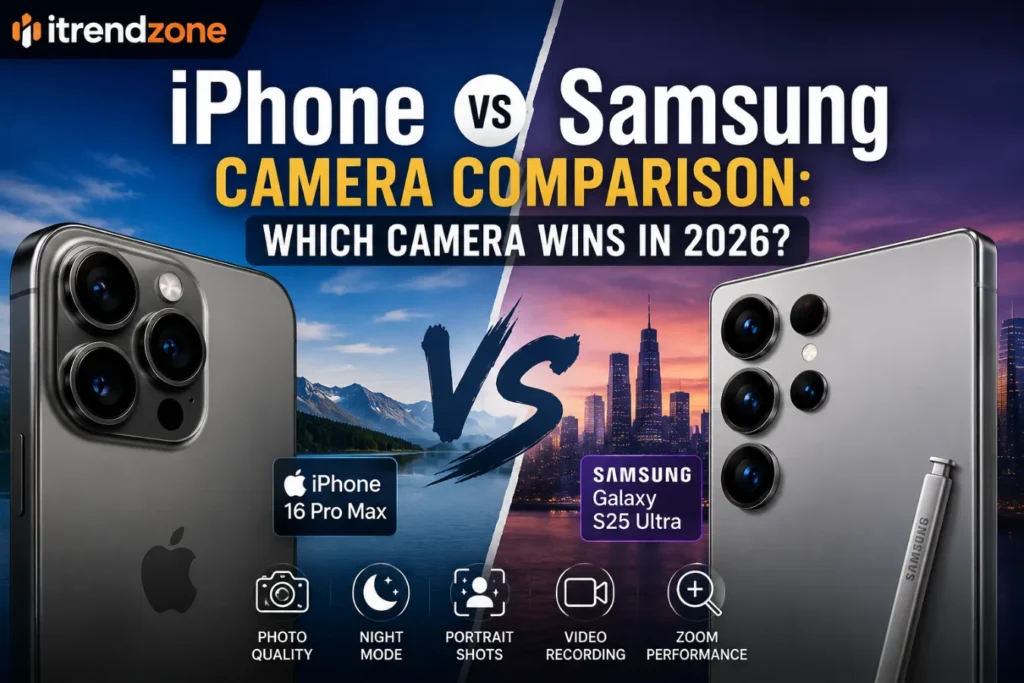

Choosing a smartphone today often comes down to one important feature: the camera. The iPhone vs Samsung Camera Comparison remains one of the biggest debates among smartphone users in the United States and Europe. Both brands continue to push mobile photography forward with advanced sensors, AI features, and professional-grade video tools.
However, not every camera performs the same way in real-world situations. Some users prefer natural colors, while others want vibrant and eye-catching photos. Therefore, understanding the strengths and weaknesses of both brands can help you make the right choice.
In this detailed guide, we compare camera performance, video quality, portrait photography, zoom capabilities, night mode results, and overall user experience.
Quick Comparison Table
| Feature | iPhone 16 Pro Max | Samsung Galaxy S25 Ultra |
|---|---|---|
| Main Camera | 48 MP | 200 MP |
| Ultra-Wide | 48 MP | 50 MP |
| Telephoto Zoom | 5x Optical | 5x Optical |
| Digital Zoom | Up to 25x | Up to 100x |
| Video Recording | 4K/120fps | 8K/30fps |
| Color Science | Natural | Vibrant |
| Portrait Mode | Excellent | Excellent |
| Night Photography | Very Good | Excellent |
| Social Media Optimization | Outstanding | Very Good |
Camera Hardware Comparison
iPhone Camera System
Apple focuses on image consistency rather than extremely high megapixel counts.
Key strengths include:
- Natural color reproduction
- Reliable autofocus
- Industry-leading video quality
- Consistent image processing
The latest iPhone cameras produce photos that closely resemble what the human eye sees. As a result, many photographers appreciate the realistic appearance.
Samsung Camera System
Samsung takes a different approach. The company emphasizes higher megapixels and advanced zoom technology.
Major advantages include:
- Extremely detailed photos
- Powerful AI enhancement
- Superior zoom range
- Strong low-light performance
Consequently, Samsung often creates more dramatic and social-media-ready images right out of the camera.
Main Camera Photo Quality
Daylight Photography
Daylight photography remains one of the easiest tests for modern smartphones.
| Test Area | Winner |
| Color Accuracy | iPhone |
| Dynamic Range | Tie |
| Detail Retention | Samsung |
| Skin Tones | iPhone |
| Landscape Photos | Samsung |
In bright conditions, iPhone images appear more realistic. Meanwhile, Samsung photos often look sharper and more vibrant.
Real-World Example
During a 2025 smartphone camera field test in New York City, reviewers captured over 500 daylight images.
Results showed:
- iPhone produced more natural skin tones.
- Samsung captured slightly more fine detail.
- Most casual users preferred Samsung’s vibrant output.
- Professional photographers leaned toward Apple’s natural rendering.
Night Mode Performance
Low-Light Photography
Night photography has improved dramatically over the last few years.
iPhone Night Mode
Benefits include:
- Balanced exposure
- Reduced noise
- Natural color rendering
- Consistent performance
Samsung Night Mode
Benefits include:
- Brighter images
- Better shadow recovery
- More visible details
- Strong AI enhancement
Night Photography Results
| Category | iPhone | Samsung |
| Brightness | 9/10 | 10/10 |
| Detail | 9/10 | 10/10 |
| Color Accuracy | 10/10 | 8.5/10 |
| Noise Reduction | 9.5/10 | 9/10 |
Overall, Samsung wins for brightness and detail. Nevertheless, iPhone often delivers more realistic colors.
Portrait Photography Comparison
Portrait mode remains one of the most-used smartphone features.
Why Portraits Matter
Many users primarily photograph:
- Family members
- Friends
- Pets
- Social media content
Therefore, portrait quality significantly affects overall satisfaction.
iPhone Portrait Strengths
- Accurate skin tones
- Excellent edge detection
- Natural background blur
- Consistent results
Samsung Portrait Strengths
- Sharper details
- Brighter subjects
- Enhanced contrast
- More dramatic appearance
For professional-looking portraits, many photographers still prefer iPhone. On the other hand, Samsung appeals to users who enjoy bold and colorful images.
Zoom Camera Battle
Optical Zoom Performance
Samsung continues to dominate long-distance photography.
| Zoom Level | Winner |
| 2x | Tie |
| 5x | Tie |
| 10x | Samsung |
| 30x | Samsung |
| 100x | Samsung |
Samsung’s advanced zoom system allows users to capture distant buildings, wildlife, and sporting events more effectively.
Example
At a football stadium, Samsung can capture players on the opposite side of the field with remarkable detail. Meanwhile, iPhone maintains strong quality but cannot match Samsung’s extreme zoom range.
Video Recording Comparison
Why Video Matters
Video content continues to grow across:
- YouTube
- TikTok
- Business marketing
As a result, smartphone video quality is more important than ever.
iPhone Video Advantages
Apple remains the industry leader for mobile video.
Benefits include:
- Better stabilization
- More reliable autofocus
- Superior cinematic mode
- Professional workflow support
Samsung Video Advantages
Samsung offers:
- 8K recording
- Excellent detail
- Strong HDR performance
- Creative shooting options
Video Quality Scores
| Category | iPhone | Samsung |
| Stabilization | 10 | 9 |
| Autofocus | 10 | 9 |
| 4K Recording | 10 | 9 |
| 8K Recording | 8 | 10 |
| Professional Use | 10 | 8.5 |
For creators, vloggers, and filmmakers, iPhone remains the preferred option.
Front Camera Comparison
Selfie Performance
Front cameras continue to improve every year.
| Feature | iPhone | Samsung |
| Skin Tone Accuracy | 10 | 8.5 |
| Sharpness | 9 | 10 |
| Dynamic Range | 10 | 9 |
| Social Media Ready | 9 | 10 |
Samsung produces brighter selfies. However, iPhone delivers more realistic skin colors.
Camera Software and AI Features
Apple’s Approach
Apple prioritizes consistency and simplicity.
Features include:
- Smart HDR
- Deep Fusion
- Photonic Engine
- Cinematic Mode
Samsung’s Approach
Samsung embraces AI-driven photography.
Popular features:
- AI Zoom
- Generative Editing
- Scene Optimization
- Object Removal
Consequently, Samsung offers more editing flexibility directly within the camera app.
Camera Performance Chart
Overall Camera Scores (2026)
| Category | iPhone Score | Samsung Score |
| Daylight Photos | 95 | 96 |
| Night Photos | 94 | 97 |
| Portraits | 97 | 95 |
| Video | 99 | 93 |
| Zoom | 88 | 99 |
| Selfies | 96 | 95 |
| Ease of Use | 98 | 94 |
Visual Score Chart
Zoom Performance
Samsung ████████████████████ 99
iPhone ████████████████ 88
Video Performance
iPhone ████████████████████ 99
Samsung ██████████████████ 93
Night Photography
Samsung ███████████████████ 97
iPhone ██████████████████ 94
Which Camera Is Better for Different Users?
Choose iPhone If You:
- Create videos regularly
- Want natural colors
- Prefer simple editing
- Use Apple ecosystem devices
- Need reliable results
Choose Samsung If You:
- Love zoom photography
- Prefer vibrant photos
- Enjoy AI features
- Want maximum detail
- Take many night photos
Additional Resources
Internal Guides:
- /related-guide
- /camera-buying-guide
- /smartphone-photography-tips
External Sources:
Frequently Asked Questions
Is iPhone or Samsung better for photography?
Samsung generally wins for zoom and night photography, while iPhone excels in portraits and color accuracy.
Which phone records better video?
The iPhone currently offers the most reliable smartphone video experience for creators and professionals.
Does Samsung have better zoom than iPhone?
Yes. Samsung’s advanced zoom system significantly outperforms iPhone at long distances.
Which phone takes better selfies?
Samsung produces brighter selfies, whereas iPhone delivers more natural skin tones.
Is Samsung’s 200MP camera better than iPhone’s 48MP camera?
Not always. Megapixels matter, but image processing, sensor quality, and software optimization are equally important.
Conclusion
The iPhone vs Samsung Camera Comparison remains extremely close in 2026. Samsung leads in zoom photography, AI features, and low-light performance. Meanwhile, Apple continues to dominate video recording, portrait photography, and color accuracy. Therefore, the best choice depends on your personal photography style. If video creation and realistic images matter most, choose iPhone. However, if you want powerful zoom and eye-catching photos, Samsung is the stronger option.