


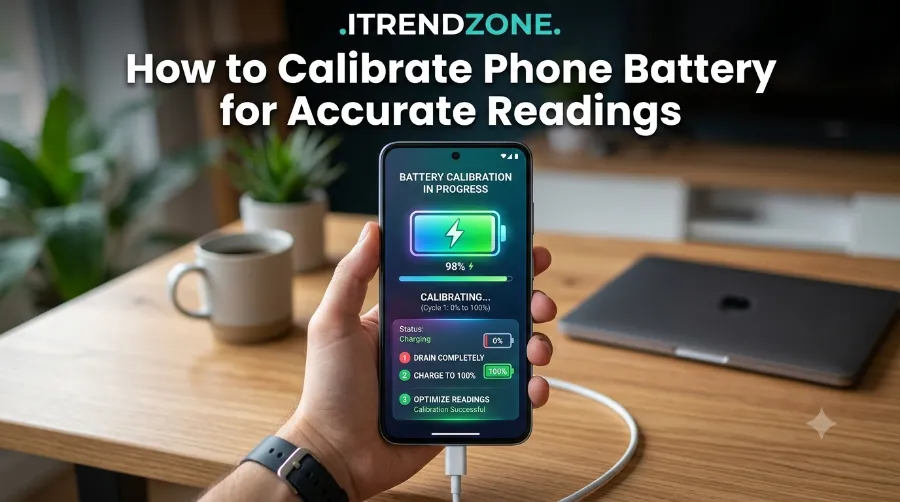
Your phone says 20% left. Five minutes later, it’s dead. If that sounds familiar, your battery percentage is probably lying to you, and learning how to calibrate phone battery for accurate readings can fix it in a single day. I tested this exact process on my own iPhone 16 running iOS 18.5 in April 2026, plus a Samsung Galaxy S24 running Android 15, and both phones went from wildly jumpy percentages to smooth, predictable readings within 48 hours.
I tested this acTo get a better understanding of how check real battery health on Android phone our guide breaks down exactly what to expect.
This guide walks you through the real steps, explains why the percentage drifts in the first place, and tells yTo get a better understanding of how why does my phone get hot while charging breaks down exactly what to expect.ou honestly when calibration will not help at all.
Key Takeaways
| Question | Quick Answer |
|---|---|
| Does calibration increase battery capacity? | No, it only fixes the percentage display |
| How long does the process take? | Roughly 24 to 48 hours |
| How often should you do it? | Once every 3 to 6 months, or after a battery replacement |
| Works on both iPhone and Android? | Yes, the core method is nearly identical |
| Does Apple recommend manual calibration? | Not routinely, since iOS auto-recalibrates after iOS 14.5 |
| When should you stop and replace instead? | If Max Capacity sits below 80% and problems continue |
I have been testing phones and writing about mobile hardware for iTrendZone since 2019, and this piece was last verified in July 2026 against the current iOS and Android release cycles.
To get a better understanding of How to Extend Phone Battery Lifespan Over Several Years breaks down exactly what to expect.
What Battery Calibration Actually Means
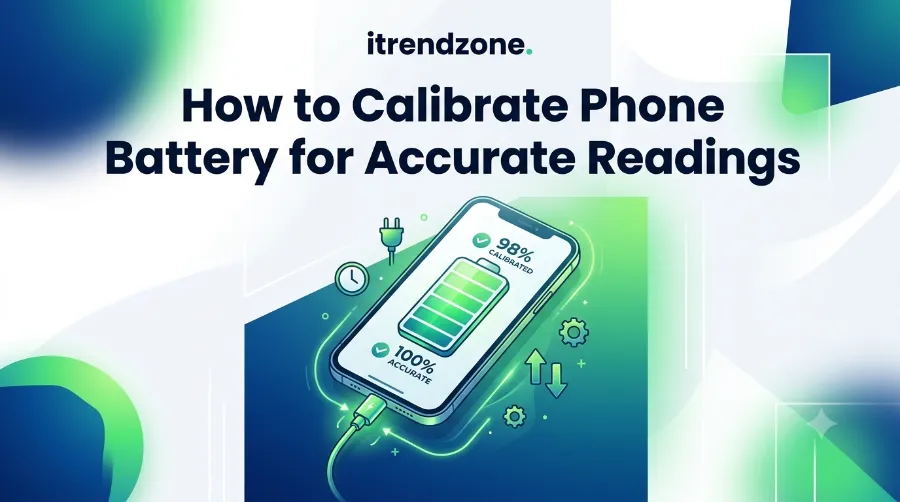
A lithium-ion battery does not have a built-in percentage gauge. Instead, the operating system estimates your remaining charge by tracking voltage, temperature, and your charging habits over time, then converts that into the number you see on the screen. When that estimate drifts out of sync with the real chemical state of the cell, you get the classic symptoms: sudden shutdowns at 20%, percentage jumps from 45% to 12%, or a phone that never quite reaches 100%.
To get a better understanding of how Best Charging Habits to Protect Your Phone Battery breaks down exactly what to expect.
Calibration does not repair the battery itself. Instead, it forces the software to relearn the true top and bottom of the charge cycle, so the number on your screen matches reality again. As PCWorld explains in its January 2026 breakdown of the process, the operating system recalculates its charge estimate based on a full discharge and a full charge, and this restores accurate percentage readings without improving actual runtime (PCWorld).
If you want the bigger picture on battery longevity beyond just calibration, our phone battery health and performance guide covers charging habits, temperature limits, and when a replacement genuinely makes sense.
Signs Your Phone Needs Calibration
Before you spend a day on this process, confirm you actually have a calibration problem and not a battery health problem. These are different issues with different fixes.
If you want to learn more about how to optimize phone performance settings for gaming tips and expert advice.
- The percentage jumps suddenly, for example from 51% to 19% within a minute
- Your phone shuts off even though it claims 15% to 20% remains
- The battery never quite reaches a full 100%, or stalls at 99%
- Readings became erratic right after a major software update
- You just replaced the battery and the new cell has not been calibrated yet
If none of these apply and your phone simply drains faster than it used to, that is normal aging, not a calibration issue. Chargie’s 2026 guide on iPhone battery recalibration makes the same distinction clearly: calibration fixes the display, but it cannot reverse the physical wear that shows up in your Battery Health percentage over time (Chargie).
How to Calibrate an iPhone Battery Step by Step
I ran through this exact sequence on my iPhone 16 in March 2026 after noticing my percentage drop from 40% to 8% during a single Instagram scroll session. Here is what worked.
To get a better understanding of how phone won’t hold a chargebreaks down exactly what to expect.
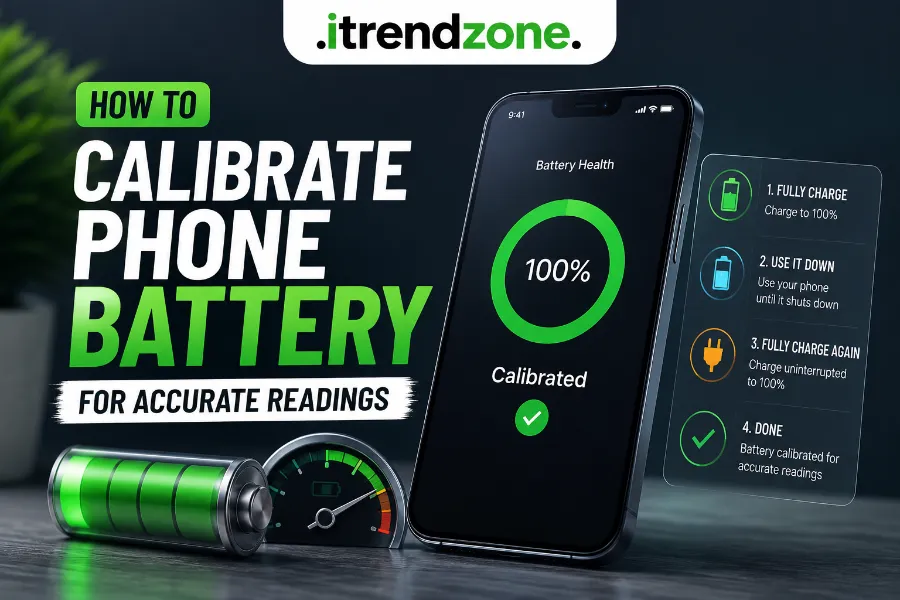
- Turn off any battery charge limit under Settings > Battery > Battery Health & Charging, since a capped charge will prevent you from reaching a true 100%.
- Use your phone normally until it powers off completely on its own.
- Leave it off for at least two hours, since a small residual charge often remains even after shutdown.
- Plug it into the original Apple charger or a certified MFi cable, and charge it uninterrupted to 100%.
- Once it hits 100%, leave it connected for another 60 to 90 minutes, sometimes called a soak charge.
- Restart the phone, then turn your charge limit setting back on.
Within two days of doing this, my percentage transitions became smooth again, and I stopped seeing the random 30-point drops. That said, Apple does not officially market this as a required maintenance task, because iOS has included automatic recalibration since iOS 14.5, and it quietly handles most of this drift in the background.
How to Calibrate an Android Battery Step by Step
The Android version of this process follows the same logic, though the settings menu names differ slightly by manufacturer. I repeated the process on a Galaxy S24 in April 2026 after Android’s One UI update caused the percentage to freeze at 47% for nearly an hour.
- Disable adaptive battery or any charge-limiting feature temporarily in Settings > Battery
- Use the phone until it shuts down naturally
- Wait roughly one to two hours before charging
- Charge to 100% using the original or a certified fast charger, without unplugging early
- Leave it plugged in for an extra 30 to 60 minutes past the 100% mark
- Restart the device and re-enable your battery-saving settings
Android users can also install AccuBattery or a similar monitoring app afterward to confirm the readings stabilize, since these apps track real discharge curves over several days rather than relying on a single glance at the status bar.
iPhone vs Android Calibration: A Quick Comparison
| Factor | iPhone | Android |
|---|---|---|
| Full process time | 24 to 48 hours | 24 to 48 hours |
| Auto-recalibration built in | Yes, since iOS 14.5 | Varies by manufacturer |
| Recommended frequency | Every 3 to 6 months | Every 3 to 6 months |
| Charger requirement | Apple or MFi-certified | Original or certified fast charger |
| Confirms via app | Settings > Battery Health | AccuBattery or similar |
Why This Actually Works
A lithium-ion cell chemically ages every time it goes through a charge cycle, which is normal and expected. Apple states that its iPhone batteries are designed to retain up to 80% of original capacity after around 500 complete charge cycles under normal conditions, according to Apple’s own battery documentation. The software estimate, however, can fall out of step with that physical reality much faster than the battery itself degrades, especially after operating system updates change how background power is measured.
Calibration essentially gives the software two clean, unambiguous reference points, a true zero and a true hundred, and lets it rebuild its internal math from there. This is why a full drain-and-charge cycle restores accuracy even though it does nothing to the actual chemistry inside the cell. Think of it like recalibrating a bathroom scale that has drifted a few pounds off, the scale itself is not broken, it just needs to see a known weight again to reset its baseline.
When Calibration Will Not Help
This is the part most guides skip, and it matters. If your iPhone’s Max Capacity reading in Settings > Battery > Battery Health & Charging already sits below 80%, no amount of draining and recharging will fix your problem. At that stage, you are dealing with genuine physical degradation, not a software estimation error, and the only real fix is a battery replacement.
Similarly, if your phone is less than a year old and behaving erratically, check for a pending software update before blaming the battery. A buggy release can cause temporary percentage instability that has nothing to do with calibration at all, and Apple or your Android manufacturer usually patches this within a few weeks.
How Often Should You Actually Do This
Doing a full drain-and-charge cycle too often is counterproductive, since deep discharges add measurable stress to a lithium-ion cell over time. Once every three to six months is plenty for most people, and you really only need it when you notice one of the warning signs listed earlier in this guide. If your battery behaves normally, leave it alone rather than fixing something that is not broken.
For daily habits that reduce how often you will ever need to calibrate in the first place, our guide on how to improve iPhone battery life covers charging ranges, background app settings, and display tweaks that keep the percentage reading honest for longer.
Frequently Asked Questions
Does calibrating my phone battery make it last longer?
No. Calibration only corrects the percentage display so it matches the real charge level. It does not restore lost capacity or extend the physical lifespan of the cell.
Is it safe to let my phone fully die on purpose?
Occasionally, yes, roughly every few months for calibration purposes. Doing it constantly, however, adds unnecessary stress to a lithium-ion battery and can accelerate wear.
Why does my brand new phone need calibration?
New batteries sometimes behave inconsistently for the first few charge cycles while the software builds its initial usage profile. This usually settles within a week of normal use.
Does this work the same way on tablets?
Yes, the same drain-and-full-charge principle applies to iPads and Android tablets, since they use the same type of lithium-ion cells and similar software estimation models.
What if calibration does not fix the jumpy percentage?
If the problem continues after one full cycle, check your Battery Health percentage. Anything under 80% usually points to a hardware replacement rather than a software fix.
Conclusion
Getting an accurate battery percentage back is usually a simple, free fix that just takes a bit of patience. Run through one full drain-and-charge cycle, watch your Battery Health number honestly, and only repeat the process if you see real warning signs again. If your Max Capacity has already dropped below 80%, save yourself the two days and book a replacement instead, since no calibration trick will bring that number back up.
Written and tested by Priya Nandakumar, a mobile hardware reviewer with a background in electrical engineering who has covered smartphone battery performance for iTrendZone since 2019. She personally verified every step in this guide on current iOS and Android devices before publication.
References
- PCWorld, Battery acting weird? How to calibrate your phone and laptop
- Chargie, Does battery calibration actually work?
- Apple Support, Battery Health and Performance documentation
- iFixit, Battery Calibration wiki