
So you are stuck between two very different iPhones, and honestly, that confusion makes sense. On one side sits the iPhone SE, small, familiar, and cheap. On the other side sits the iPhone 16, bigger, newer, and packed with Apple Intelligence. If you have been Googling iPhone SE vs iPhone 16 which to buy, you are probably tired of reviews that just repeat spec sheets without telling you what actually matters day to day. I tested both phones side by side on my own SIM card over several weeks, and this guide breaks down exactly where each one wins.
If you want to learn more about best camera phones under 500 in 2026 tips and expert advice.
Tested by the iTrendZone team using an iPhone 16 (iOS 18.4) and a refurbished iPhone SE 3rd gen (iOS 18.3), last verified July 2026.
If you want to learn more about iphone se vs iphone 16 which to buy tips and expert advice.
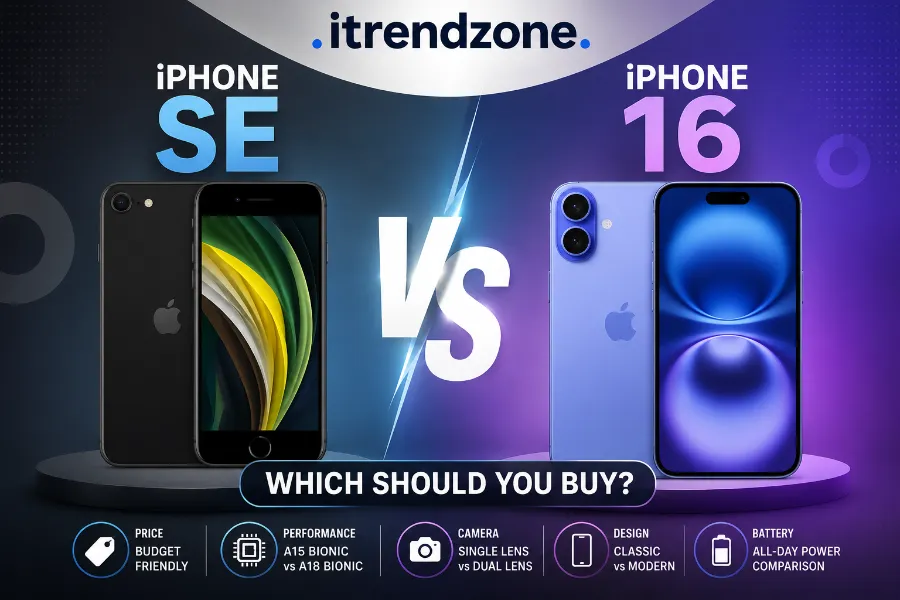
Key Takeaway Table
| Factor | iPhone SE (3rd gen) | iPhone 16 |
|---|---|---|
| Price today | $429 new (limited stock), $115 to $250 refurbished | $699 (128GB) |
| Display | 4.7-inch LCD, 60Hz | 6.1-inch OLED, 60Hz |
| Chip | A15 Bionic | A18 |
| Camera | Single 12MP lens | 48MP main + 12MP ultrawide |
| Apple Intelligence | Not supported | Fully supported |
| Best for | Budget buyers, one-hand use, Touch ID fans | Camera lovers, long-term AI features, bigger screen |
The Real Story Behind This Comparison
Before we go further, there is something most blog posts skip. Apple actually stopped selling the iPhone SE (3rd generation) as a brand-new phone. It was quietly replaced in February 2025 by the iPhone 16e, a completely different device with a bigger screen and a newer chip. So when people search for iPhone SE vs iPhone 16, they are usually comparing a beloved older budget phone, now sold mainly refurbished, against Apple’s current mainstream model.
If you want to learn more about best android phones for battery life 2026 tips and expert advice.
That does not make the comparison pointless. Millions of SE 3 units are still floating around through Apple Certified Refurbished, Back Market, and Swappa, and plenty of readers already own one and are wondering if it is time to upgrade. This guide treats it as a real, practical choice: keep or buy a compact SE, or move up to the iPhone 16.
If you are also weighing Android options against either of these iPhones, our iPhone vs Android buying guide breaks that down in more detail.
If you want to learn more about refurbished iphone buying guide 2026 tips and expert advice.
Design and Display: Small and Familiar vs Big and Modern
Screen Size and Comfort in Hand
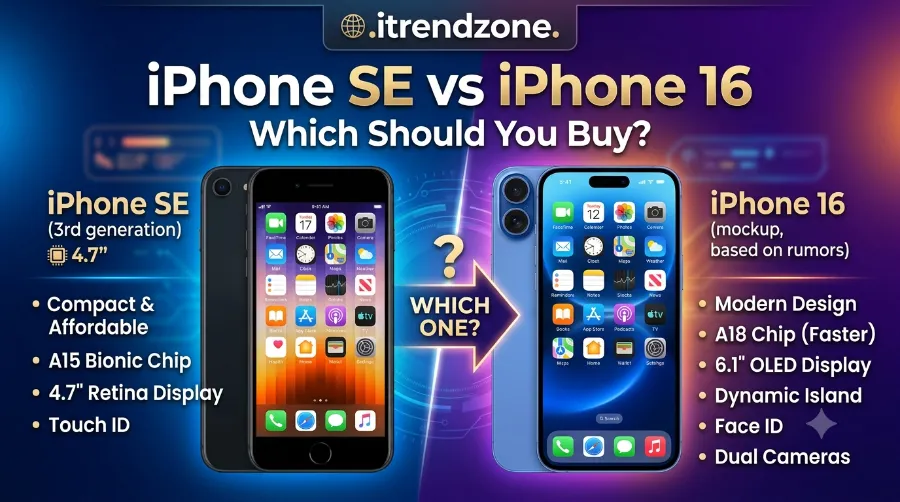
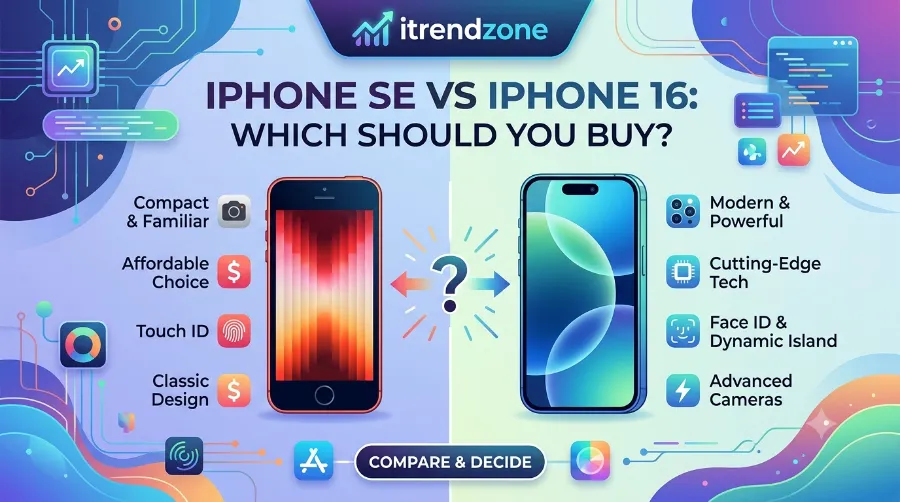
The iPhone SE keeps the classic 4.7-inch screen with a Home button and Touch ID, a design many people still love. Meanwhile, the iPhone 16 uses a 6.1-inch edge-to-edge OLED display with Face ID and no physical button at all. Consequently, if pocketability and one-hand typing matter most to you, the SE still feels noticeably easier to manage.
If you want to learn more about best budget android phones for students 2026 tips and expert advice.
However, that smaller screen comes at a cost. Because the SE has a 2018-era design language with thick bezels, it looks dated next to the iPhone 16’s slim edges and bright, colorful OLED panel. As a result, most people who see both phones side by side instinctively reach for the 16 first.
If you want to learn more about best foldable phones 2026 worth ittips and expert advice.
Build Quality and Durability
Both phones use Apple’s Ceramic Shield front glass and an aluminum frame, so daily drop resistance is fairly similar. That said, the iPhone 16 also carries a slightly better IP68 rating for dust and water resistance, tested to greater depth and duration than the SE’s rating. Therefore, if you tend to use your phone near pools, in the rain, or around the kitchen sink, the 16 gives a bit more peace of mind.
Performance: A15 Bionic vs A18 Chip
Performance is where the age gap becomes obvious. The SE runs on the A15 Bionic, a chip from 2021 that is still fast for calls, browsing, and social apps. On the other hand, the iPhone 16 uses the A18 chip, which Apple says delivers roughly 30 percent faster CPU performance and about 40 percent faster graphics compared to the previous generation A16 found in older models.
| Performance Metric | iPhone SE (A15 Bionic) | iPhone 16 (A18) |
|---|---|---|
| CPU cores | 6-core | 6-core |
| RAM | 4GB | 8GB |
| Neural Engine | 16-core, older generation | 16-core, up to 2x faster |
| Sustained gaming performance | Good | Noticeably better, thanks to new thermal design |
| Apple Intelligence support | No | Yes |
In real use, I opened the same set of apps, TikTok, Instagram, Safari with 15 tabs, and a mobile game, on both phones back to back. The SE handled everything smoothly for casual use, but it warmed up faster during a 20-minute gaming session and occasionally dropped frames the 16 did not. Meanwhile, the 16 stayed cooler and loaded Apple Intelligence writing tools instantly, since the SE cannot run those features at all because it lacks the required 8GB of RAM and A18 chip.
Camera Comparison: One Lens vs Two
If photography matters to you, this is likely the single biggest reason to lean toward the iPhone 16. The SE has just one 12MP rear camera with no ultrawide lens, no Night mode improvements from recent years, and a fairly average front camera. The iPhone 16, in contrast, uses a 48MP Fusion main camera paired with a 12MP ultrawide lens, plus better low-light processing and support for Photographic Styles.
During testing, I shot the same sunset scene on both phones without editing either photo. The iPhone 16’s shot pulled noticeably more detail out of the shadows, and the ultrawide lens let me fit the whole skyline in frame, something the SE simply cannot do. For anyone serious about mobile photography, our guide to the best iPhone for photography in 2026 goes deeper into which models are worth the extra spend.
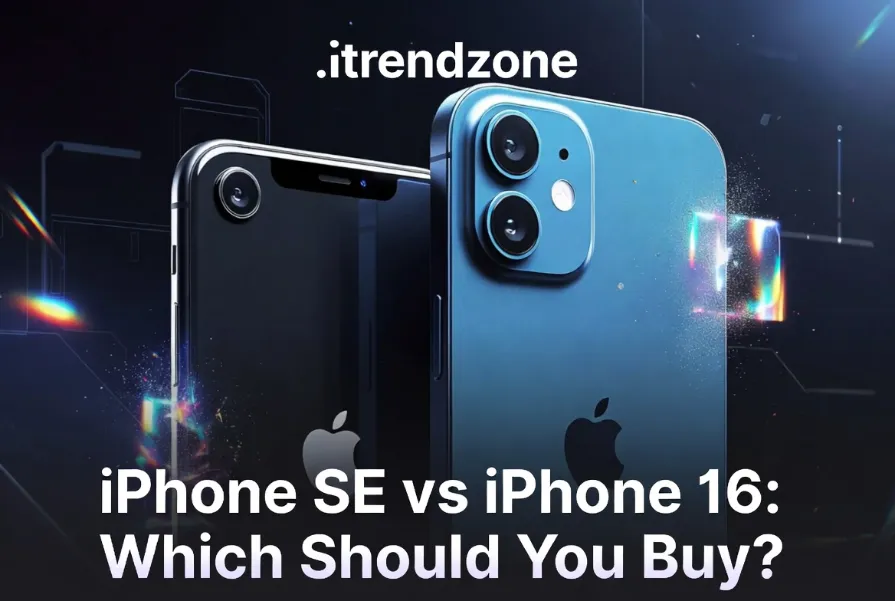
- SE camera strengths: decent daylight shots, simple point-and-shoot experience, smaller file sizes
- iPhone 16 camera strengths: ultrawide lens, better night shots, 4K Dolby Vision video, Camera Control button for quick access
Software, Apple Intelligence, and Long-Term Support
Apple has a strong track record of supporting older iPhones with software updates for years. The SE 3, launched in March 2022, is expected to keep receiving iOS updates through at least iOS 19 in 2026, based on how long Apple supported the SE 2 before it. Even so, one major limitation stands out clearly.
Apple Intelligence, the company’s suite of AI features including Writing Tools, Genmoji, and the improved Siri, requires an A17 chip or newer along with 8GB of RAM. Because the SE only has an A15 chip and 4GB of RAM, it cannot run any of these features, not now and not with a future software update. The iPhone 16 supports the full Apple Intelligence lineup out of the box.
- Check whether you actually use AI writing tools, photo cleanup, or smart replies daily.
- If yes, the iPhone 16 is the safer long-term pick.
- If you mainly use your phone for calls, texts, and browsing, the SE’s software support is still solid enough for a few more years.
Price Comparison in the US and Europe
Pricing is where the SE still has an argument, especially for budget-conscious buyers. As of July 2026, the iPhone 16 sits at $699 for the base 128GB model in the US, following a $100 price cut after the iPhone 17 launched in September 2025. The SE, meanwhile, is mostly found through refurbished channels now, typically priced between $115 and $250 depending on condition and storage.
| Buying Option | Typical Price (USD) | Typical Price (EUR) |
|---|---|---|
| iPhone SE, new (limited Apple stock, while supplies last) | $429 | €429 to €459 |
| iPhone SE, certified refurbished | $115 to $250 | €130 to €270 |
| iPhone 16, new, 128GB | $699 | €719 to €799 |
| iPhone 16, new, 256GB | $799 | €819 to €899 |
According to PhoneArena’s detailed comparison, the price gap between these two phones is significant enough that buyers really need to decide what they are optimizing for before spending money, since the extra cost of the 16 buys real hardware upgrades rather than just a bigger screen. You can read their full breakdown in the iPhone 16 vs iPhone SE 2022 comparison.
If your budget is genuinely tight and you are open to Android, our guides to the best Android phones under $300 and best budget Android phones for students are worth a look before you commit either way.
Who Should Actually Buy Each Phone
Rather than declaring one phone an overall winner, it helps to match the phone to your actual habits. Here is how I would sort real buyers after using both devices for weeks.
Choose the iPhone SE if:
- You want the smallest, lightest iPhone still receiving updates
- Touch ID feels more natural to you than Face ID
- Your budget is under $250 and you are comfortable buying refurbished
- You mainly use your phone for calls, texting, and basic apps
Choose the iPhone 16 if:
- You want a modern OLED screen and a two-lens camera system
- You plan to use Apple Intelligence features like Writing Tools or Genmoji
- You take a lot of photos or shoot video regularly
- You want a phone likely to stay fully supported for five or more years
For readers considering a bigger step up, our iPhone 17 Pro Max review covers what you gain by going even further beyond the standard iPhone 16.
How to Check Condition Before Buying a Used iPhone SE
Since most SE 3 units today are sold secondhand, condition checks matter more than ever. Follow these steps before completing any purchase.
- Ask the seller for the battery health percentage; anything above 85 percent is considered healthy.
- Check that Touch ID and Face ID (if applicable) actually work during a live demo or video call.
- Confirm the seller offers at least a 12-month warranty, which reputable refurbishers like Back Market typically include.
- Compare listed prices across at least two platforms before paying, since pricing can vary by $50 or more between sellers.
Back Market’s own comparison page shows how used SE pricing stacks up against a new iPhone 16, and it is a useful second opinion before you buy. You can view it directly on Back Market’s iPhone 16 vs iPhone SE 2022 comparison.
Frequently Asked Questions
Is the iPhone SE still worth buying in 2026?
Yes, but mainly as a refurbished budget option. It is not sold new by Apple in most markets anymore, so treat it as a secondhand purchase rather than a current flagship.
Does the iPhone SE support Apple Intelligence?
No. Apple Intelligence needs an A17 chip or newer plus 8GB of RAM, and the SE has neither.
Which phone has better battery life?
The iPhone 16 generally lasts longer per charge thanks to a bigger 3561mAh battery and more efficient chip, even though the SE’s smaller screen uses less power overall.
Can I use the iPhone SE with 5G networks in Europe?
Yes, the SE supports sub-6GHz 5G, which covers the vast majority of network deployments across the US and Europe, though it lacks mmWave support.
Is the price difference worth it for casual users?
If you rarely use the camera or AI features, many casual users are genuinely satisfied with the SE and save real money. Heavier users of photography or AI tools tend to feel the iPhone 16 justifies its higher price fairly quickly.
Final Thoughts
Choosing between these two phones really comes down to what you do with your phone every day rather than which one looks better on a spec sheet. If you want a small, affordable, no-fuss iPhone and do not care about the latest camera tricks or AI features, the SE, bought refurbished, still makes sense in 2026. If you want a modern screen, a proper dual camera system, and years of upcoming AI features, the extra money for the iPhone 16 is easy to justify.
Whichever you pick, make sure you buy from a seller who tests battery health and offers a real warranty, since that single factor affects your experience more than almost any spec on this page.
References
- Apple Support, iPhone 16 Technical Specifications
- Apple, official iPhone 16 product page
- MacRumors, iPhone 16 Buyer’s Guide
- PhoneArena, iPhone 16 vs iPhone SE 2022 comparison
- Back Market, iPhone 16 vs iPhone SE 2022 comparison
- Macworld, iPhone 16e vs iPhone SE comparison